30 Jun 2026
Life EPICS project reaches a key milestone
IN THE NEWS
The LIFE EPICS project has reached an important stage, marking solid progress across its core activities and delivering tangible progress in staff training, repair activities and circular retail practices.
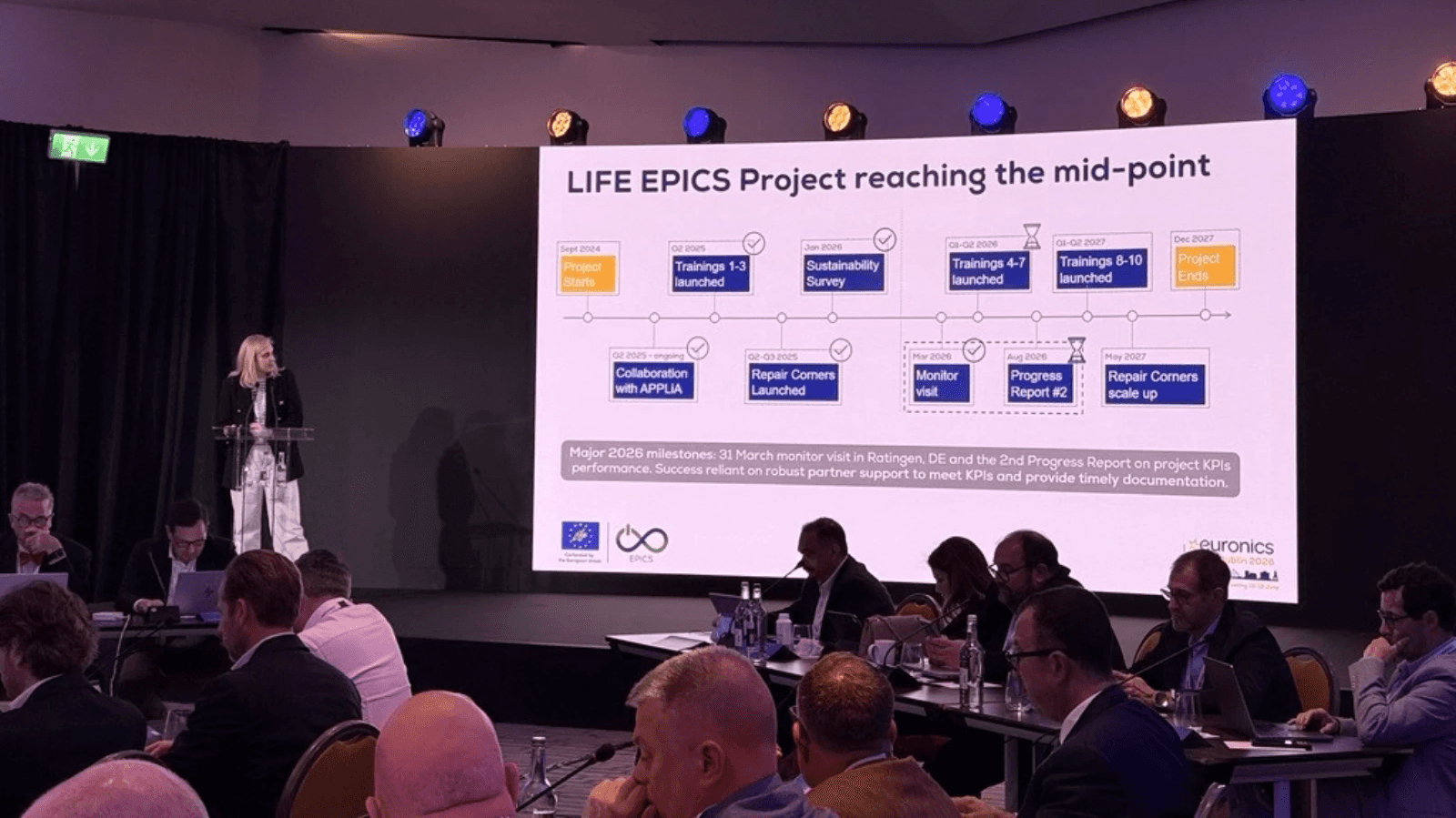
As part of this milestone, project partners, Euronics members and key stakeholders gathered in Dublin for a dedicated mid-term session, providing a valuable opportunity to review achievements, exchange insights and align on the next phases of the project.
Training as a key driver of change
Training activities continue to play a central role in enabling the transition towards more sustainable consumption.
A series of online modules and in-person sessions have already been rolled out, focusing on:
Understanding EU energy labels and sustainability features
Supporting store staff in explaining relevant product characteristics (energy efficiency, repairability and recyclability)
Strengthening confidence in customer conversations
Thousands of professionals have already been trained, and further efforts are underway to accelerate participation through additional sessions, new country rollouts and closer collaboration with partners and suppliers.
Strong momentum across markets
The project continues to make steady progress, supported by strong collaboration between partners and positive feedback from EU monitoring.
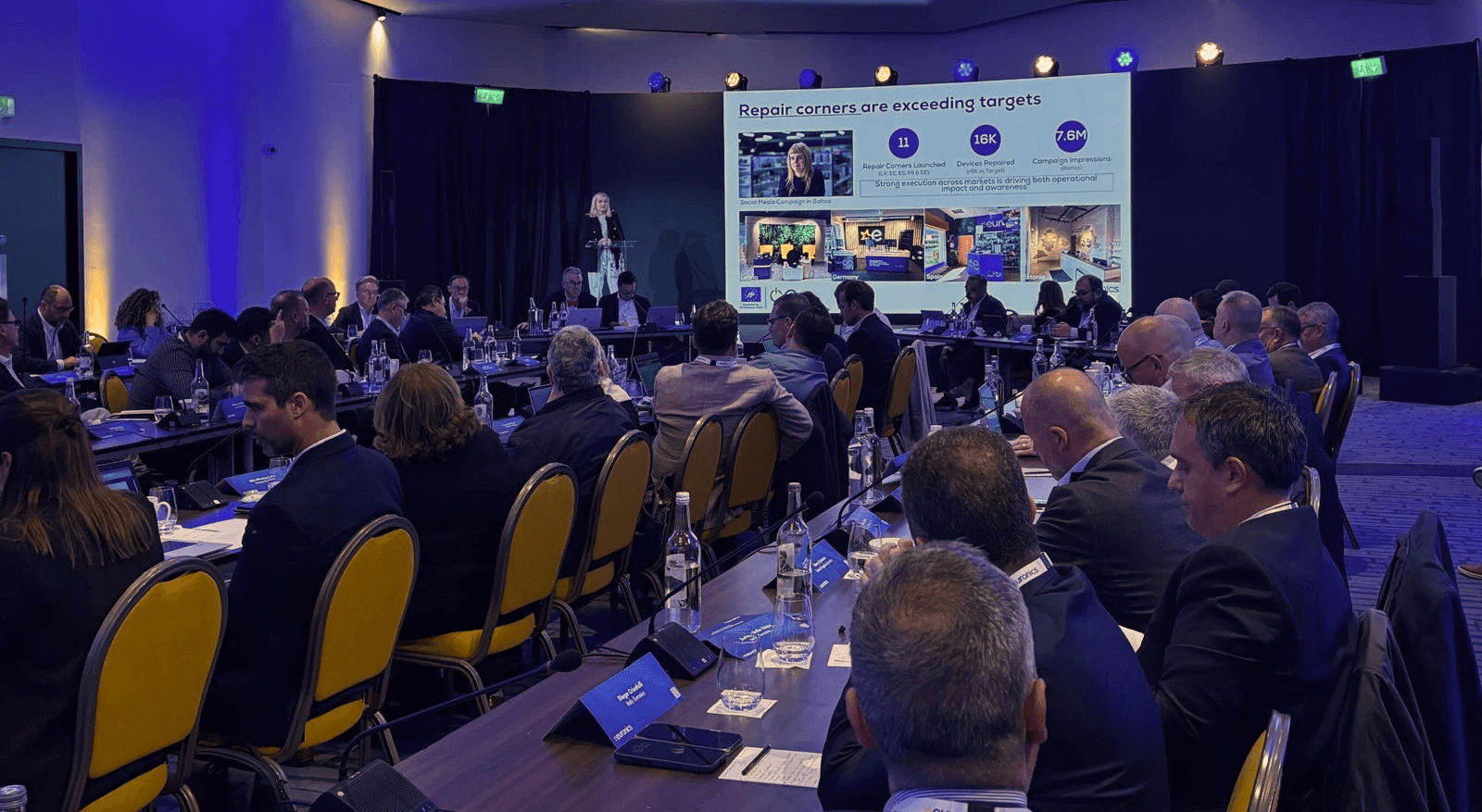
One of the most tangible outcomes so far is the implementation of Repair Corners, now active in Germany, France, Spain, Latvia and Estonia. These initiatives are already delivering significant impact, with more than 16,000 devices repaired — exceeding initial expectations.
At the same time, communication and awareness campaigns are driving engagement at national level, helping to position repair as a practical and accessible solution for consumers. In the Baltics alone, campaign activities have reached millions of people, reinforcing visibility and behavioural change.
Advancing the Sustainability Index
Another key area of work is the development of a methodology for communicating product sustainability characteristics, taking account of relevant EU requirements and information frameworks.
This initiative is being developed in close cooperation with industry stakeholders and European institutions to ensure consistency with upcoming regulation. While this collaborative approach adds complexity, it strengthens the overall methodology and long-term impact.
Important steps have already been completed, including stakeholder alignment and consumer research to better understand how sustainability is perceived and communicated.
Next phase of the project
As the project moves forward, the focus will be on scaling up successful initiatives, strengthening training delivery and further advancing strategic work such as the Sustainability Index.
Continued collaboration between partners, together with effective communication and dissemination activities, will be essential to maximise the impact of the project and ensure that results are shared widely across Europe.