7 Jul 2026
Life EPICS Stakeholder Committee Meets in Dublin
IN THE NEWS
On 11 June 2026, the Life EPICS Stakeholder Committee gathered during the Euronics AGM in Dublin, bringing together representatives from project partners, retail organisations, suppliers, industry associations and consumer-focused organisations to review progress and discuss the next phase of the project. The workshop provided an opportunity to reflect on achievements reached at the project's midpoint and explore how sustainability information can be communicated more effectively to consumers.
The Life EPICS project was launched to address the growing challenge of electronic waste and improve circularity within the consumer electronics and home appliance sector. Working across Spain, France, Germany, Estonia, Latvia and Lithuania, the project focuses on three key objectives: delivering sustainability training for retail staff, expanding repair and reuse activities, and developing a consumer-focused approach to sustainability information for household appliances.
Strong Progress Across All Three Project Goals
The project consortium reported significant progress since the project's launch in September 2024. Five of the ten planned sustainability training modules are now available, helping retail staff better understand the EU Energy Label, strengthen customer conversations around product characteristics such as energy efficiency and repairability.
Repair and reuse activities have also gained momentum. Repair Corners have been established across participating countries, generating both operational results and consumer engagement. Project partners highlighted strong awareness-building efforts, pcarticularly through campaigns in the Baltic markets, demonstrating how repair services can support circular economy objectives while encouraging repair, reuse and responsible end of life practices.
Discussing the Future of Sustainability Information
A central theme of the workshop was how sustainability information can be communicated more effectively to consumers. The discussion was informed by findings from recent Life EPICS consumer research, which explored both the factors that influence purchasing decisions and consumers’ perceptions of sustainability-related information.
The survey results confirmed that purchasing decisions are primarily driven by price, product performance and value for money, while sustainability acts as an important factor when comparing alternatives. Participants reflected on these findings and discussed how sustainability information can support consumers in making informed choices without adding unnecessary complexity to the purchasing process.
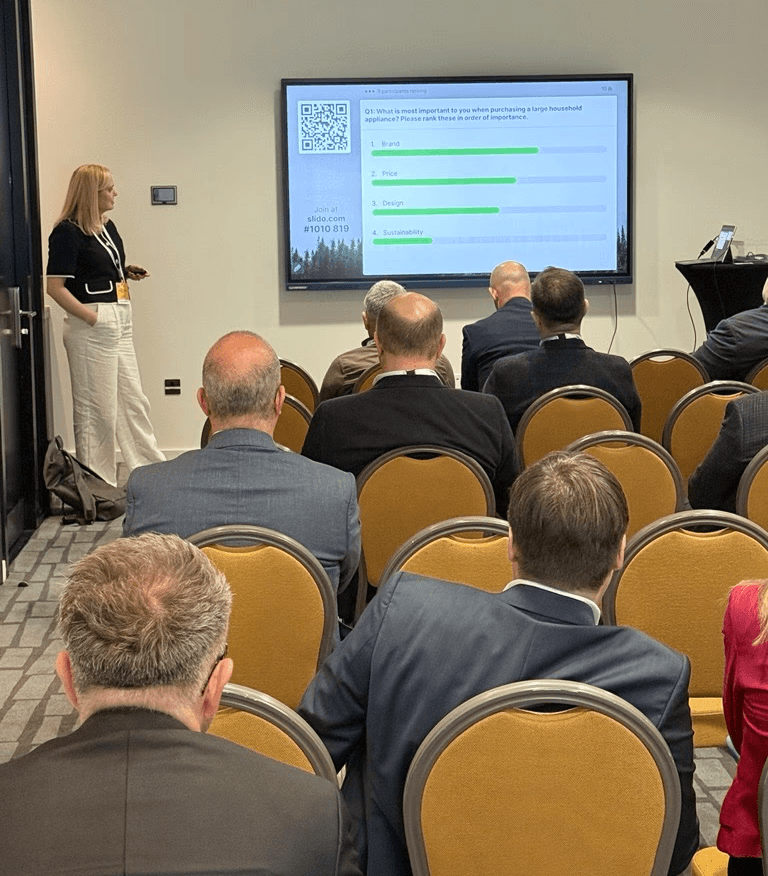
Particular attention was given to the sustainability aspects consumers identified as most relevant. According to the research, repairability, product longevity, energy efficiency, access to spare parts and recyclability were among the factors consumers value most when considering a product's sustainability credentials. Stakeholders agreed that these findings reflect growing consumer interest in products that last longer and generate less waste over their lifetime.
The workshop also explored how sustainability information should be presented. Both survey results and stakeholder discussions pointed towards a preference for clear, simple and visual communication that consumers can quickly understand. Participants highlighted the importance of transparency and credibility, while noting that overly complex ratings or excessive information could reduce consumer trust and engagement.
In addition, stakeholders exchanged views on how sustainability communication may evolve in the coming years and how future approaches can remain relevant in a rapidly changing market and regulatory environment. The conversation reinforced the importance of continued collaboration between retailers, manufacturers, industry associations and consumer representatives to ensure that sustainability information remains meaningful, practical and consumer-focused.
Looking Ahead
The meeting concluded with strong support for the project's objectives and recognition of the progress achieved so far. Participants agreed that repairability and product longevity should remain central elements of future sustainability communication and emphasised the importance of maintaining a transparent and evidence-based approach that resonates with consumers.
Looking ahead, the Life EPICS consortium will continue building on the insights gathered through stakeholder engagement, consumer research and project activities across participating countries. As the project enters its second half, collaboration between partners and stakeholders will remain key to ensuring that its outcomes contribute to a more sustainable and circular future for the consumer electronics and home appliance sector.